A TPU print can look sharp immediately after UV curing but still fail during handling, transfer or repeated use. One common complaint from 3D UV TPU DTF printers is that a design printed with flexible UV ink can be scratched or marked by a fingernail. The issue is not always poor film quality. It can be a trade-off between the softness required for a flexible application and the surface hardness expected from a durable print.
TPU UV printing requires a balance between ink flexibility, layer construction and surface protection. Flexible UV ink is generally selected when a design must bend or stretch with the TPU. Neutral UV ink can provide a firmer surface and, in some systems, better resistance to fingernail scratching, although it may feel less soft. White ink, color ink and varnish also influence the final structure.
This guide addresses common buyer and printer questions: Which UV ink should be used on TPU? Why does flexible ink sometimes scratch? Can multiple white ink layers improve the result? Does a matte or textured surface help? The recommendations distinguish practical production observations from universal technical rules.
Quick Answer: Which Ink and Layer Structure Should You Test?
For a TPU design that needs maximum softness and repeated stretching, start by testing a compatible flexible UV ink. If the design needs a firmer surface and better resistance to light fingernail scratching, compare a neutral UV ink. In our production observations, a structure using five layers of 100% white ink, followed by color ink and varnish, can create a fuller raised effect and improve resistance to light fingernail scratching in some printing setups. Applying varnish across the full graphic may also help create a more continuous protective finish. Results depend on ink chemistry, film coating, layer thickness and UV curing. Treat this structure as a test option, not a guaranteed recipe.
Key Takeaways
● Flexible UV ink prioritizes softness and movement, so its cured surface may be more vulnerable to fingernail marks.
● Neutral UV ink can offer a firmer finish and better scratch performance in some systems, with some reduction in softness.
● Multiple white ink layers build the raised structure; color ink and varnish complete the visual and surface finish.
● Matte or textured surfaces may help mechanical anchoring in a suitable coating system, but texture alone does not guarantee adhesion.
● Test the complete film, ink, varnish and curing combination before approving mass production.
1. Why Ink Type Changes the Performance of a TPU Print
The cured ink film must perform two jobs: remain attached to the TPU and tolerate the movement expected in the final application. These requirements can compete with each other.
Flexible UV ink: softness comes with a different surface feel
Flexible UV ink is formulated to accommodate bending and stretching. Its cured film is generally designed to deform more readily than a rigid ink film. This is useful for garment transfers, flexible labels and other applications where the TPU design moves with the base material.
However, a softer surface may show marks more readily under a fingernail or repeated rubbing. That does not automatically mean the ink has failed to adhere. A surface scratch, cohesive damage within the ink film and complete delamination from the TPU are different failure modes and should be assessed separately.
Neutral UV ink: a compromise between softness and surface resistance
Neutral UV ink typically sits between flexible and hard ink in terms of mechanical feel. In our product and process comparisons, neutral ink can provide better resistance to fingernail scratching than flexible ink, while retaining more flexibility than a hard ink system.
This makes neutral ink worth evaluating when the design needs a more durable surface but does not undergo severe stretching. It is not automatically the best choice for every TPU application. A print that passes a fingernail test may still crack when repeatedly stretched.
Hard UV ink: not automatically a better solution
Hard UV ink may form a firmer surface, but a rigid cured film can be unsuitable for a flexible TPU design. If the printed structure cannot follow the movement of the material, bending or stretching may cause cracking or edge damage.
The practical choice is therefore not simply the hardest ink available. It is the ink whose cured properties match the movement and handling requirements of the finished product.
For a broader overview of ink characteristics, see our guide to flexible, neutral, or hard UV ink.
2. How White Ink, Color Ink and Varnish Work Together
A 3D UV TPU print is a layered construction, not just a colored image placed on a film. Each layer contributes to the visual appearance and mechanical behavior of the finished graphic.
White ink builds the raised foundation
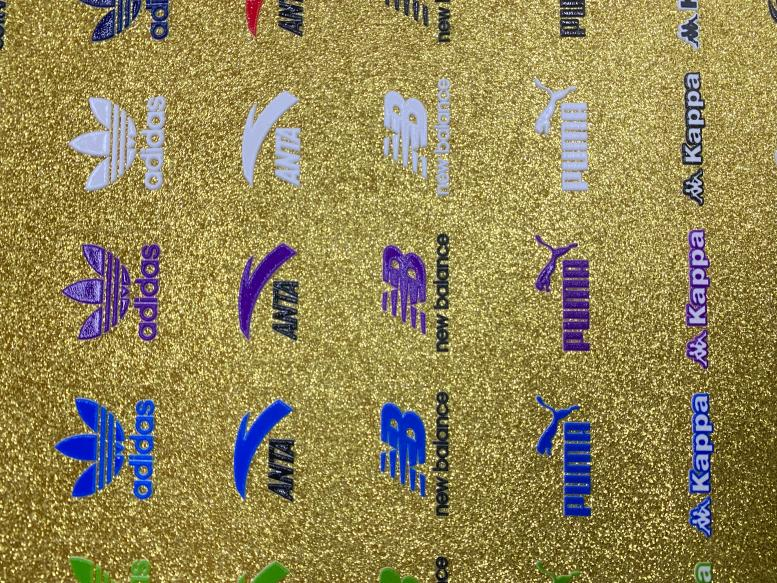
White ink is commonly used to build opacity and thickness in 3D UV TPU printing. Increasing the number of white ink layers can make the graphic look fuller and more raised. The final effect depends on the printer’s ink deposition, white ink settings, curing sequence and graphic design.
In our production observations, five layers of 100% white ink can be a useful test structure when a more substantial raised effect is required. This should not be interpreted as a fixed specification for every printer. Excessive ink deposition may create a thick structure that is harder to cure consistently or less comfortable when transferred onto flexible fabric.
Color ink defines the design
Color ink provides the visible graphic, but its position in the layer sequence matters. The color layer must bond properly to the underlying structure and remain compatible with the finishing layer.
If color ink is applied over a thick white foundation, printers should check whether the complete stack cures evenly. Poor intercoat adhesion can lead to chipping or separation even when the ink appears dry on the surface.
Varnish creates the finishing surface
Varnish can change the surface feel, gloss level and protective characteristics of a print. Applying varnish over the full graphic can create a more continuous top layer than coating only selected areas. In suitable systems, this may help the design resist light fingernail scratching and everyday handling.
The outcome depends on varnish chemistry, coating thickness, compatibility with the color ink and the final UV exposure. A varnish layer cannot compensate for poor adhesion underneath or incomplete curing.
The Printing Industries of America guide identifies ink chemistry, surface energy and surface preparation as important variables in UV ink adhesion. Its UV printing adhesion guide is useful background when diagnosing film-and-ink compatibility.
 |
 |
3. Why Matte and Textured TPU Surfaces May Behave Differently
Surface finish can influence both the appearance of a raised graphic and the way an ink system anchors to a substrate.
A matte or rough surface may provide microscopic surface features that support mechanical anchoring, depending on the coating design. It can also make a raised design appear more dimensional because the surrounding surface reflects light differently from the printed area.
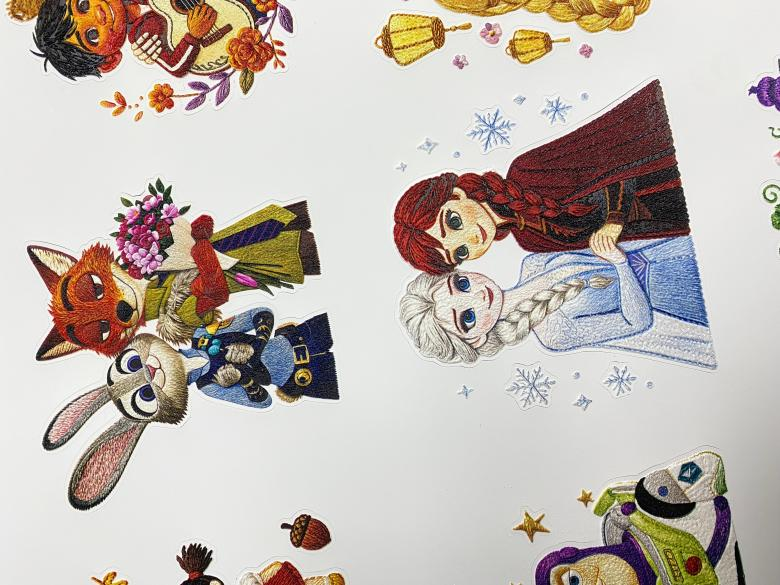
In our production observations, a full varnish layer over a white-and-color ink structure can be particularly effective visually on matte or textured surfaces. The contrast between the textured background and the smoother printed area can make the graphic look more raised. Some tested combinations have also shown improved resistance to light fingernail scratching.
This is not a rule that every rough surface provides stronger adhesion. A textured coating can still be chemically incompatible with a particular ink. Dust, release agents, oils or inconsistent surface treatment can also weaken bonding.
For a new film, evaluate three things separately:
(1) Wetting: Does the ink spread evenly without beading or forming gaps?
(2) Adhesion: Does the cured ink remain bonded to the TPU coating?
(3) Surface durability: Does the finished graphic resist the type of scratching and rubbing expected in use?
Do not use visual roughness as a substitute for adhesion testing.
4. Choosing an Ink System for Different TPU Applications
The right ink depends on how the finished graphic will be used. A decorative patch, a flexible garment logo and a raised label may have different performance priorities.
|
Decision factor |
Flexible UV ink system |
Neutral UV ink system |
| Soft hand feel | Generally softer | Generally firmer |
| Bending and stretching | Better suited to higher flexibility demands | Suitable when movement is moderate; test actual stretch |
| Fingernail scratch response | May show marks more readily | Can offer better resistance in some systems |
| Raised graphic construction | Can be combined with white ink and varnish | Can also be combined with white ink and varnish |
| Main selection priority | Flexibility and softness | Balance of surface resistance and flexibility |
This comparison is qualitative. It does not assign universal hardness, elongation or scratch-test values because these depend on the specific ink formulation and printer settings.
Garment logos and stretch fabrics
For a logo applied to stretch fabric, flexibility should remain a primary selection criterion. The printed structure must tolerate the movement of both the TPU and the garment. A neutral ink may be worth testing if fingernail resistance is a concern, but the transfer should also be checked under the expected stretch conditions.
Decorative patches and labels
For decorative patches that are handled frequently but do not undergo substantial stretching, neutral UV ink may provide a useful balance. A raised white foundation and a full varnish finish can be evaluated to improve the visual depth and surface feel.
Detailed graphics and raised lettering
For small text, narrow lines and sharp edges, excessive ink thickness can reduce definition or create uneven edges. The goal is to build enough height for the intended 3D effect without flooding fine details. Test the white ink volume and varnish coverage using the actual artwork.
5. A Practical Testing Workflow Before Mass Production
A reliable TPU print approval should evaluate the whole construction rather than one ink layer in isolation.
Step 1: Confirm film and ink compatibility
Check the film’s printable surface and the ink supplier’s recommendations. Confirm that the selected ink is designed for flexible TPU applications.
Step 2: Print a controlled comparison
Prepare samples using flexible and neutral UV ink while keeping the TPU film, artwork and curing conditions as consistent as possible. Change one variable at a time so the cause of any difference is clear.
Step 3: Compare layer structures
Test a standard white ink build against the five-layer, 100% white ink structure. Add color ink and compare varnish coverage options, including full-graphic coverage where appropriate.
Step 4: Check curing and intercoat adhesion
A surface that feels dry is not necessarily proof that every layer is fully cured or well bonded. The UV Ink Curing Troubleshooting guide from the Printing Industries of America lists under-curing, over-curing and ink incompatibility among possible causes of adhesion problems. Review the UV ink curing troubleshooting guide and follow the ink manufacturer’s curing recommendations.
Step 5: Run practical performance checks
Use consistent methods and record the results:
Fingernail scratch test under controlled, repeatable pressure.
Tape or cross-hatch adhesion assessment where appropriate for the material and test method.
Bending and stretching tests that represent the actual application.
Heat-transfer evaluation using the intended press conditions.
Washing or abrasion tests if required by the end customer.
A fingernail test is a useful screening check, but it is not a complete durability standard. Do not describe a sample as wash-proof or abrasion-proof based on this test alone.
Step 6: Approve the complete production recipe
Record the TPU film type, ink series, white ink layer count, color settings, varnish coverage and curing parameters. Keep a retained sample from the approved batch for future comparison.
6. Common Questions About TPU UV Ink and Scratch Resistance
Why can flexible UV ink be easier to scratch on TPU?
Flexible UV ink is formulated to bend with flexible materials. Its softer cured film may show fingernail marks more readily than a neutral ink system. Actual scratch performance also depends on the TPU coating, ink compatibility, curing, layer thickness and varnish.
Does five layers of 100% white ink improve TPU print durability?
In our production observations, five layers of 100% white ink followed by color ink and varnish can create a fuller 3D structure and improve resistance to light fingernail scratching in some setups. It is a process starting point for testing, not a universal formula. Excessive ink thickness or insufficient curing can cause other defects.
Is neutral UV ink better than flexible UV ink for TPU printing?
Neutral UV ink can offer better resistance to fingernail scratching in some applications, while flexible UV ink generally provides greater softness and flexibility. Neutral ink may be a useful compromise when surface durability matters, but the correct choice depends on the amount of bending and stretching in the final application.
Does a matte or rough TPU surface always provide stronger ink adhesion?
No. A matte or textured surface may improve mechanical anchoring or make a raised print appear more defined, depending on its coating and surface structure. Surface appearance alone does not prove stronger adhesion. Test the exact film-and-ink combination before production.
Conclusion: Specify the Performance You Need, Then Test the Complete System
A successful TPU UV print is not defined by scratch resistance alone. The ink must remain attached while delivering the softness, dimensional appearance and durability required by the application. Flexible UV ink is a strong candidate when softness and movement matter most. Neutral UV ink is worth evaluating when a firmer surface and better fingernail scratch response are priorities.
A layered structure using white ink, color ink and varnish can create a fuller 3D appearance and may improve light scratch resistance in suitable conditions. Matte or textured surfaces can further influence the visual contrast and anchoring behavior, but they do not replace compatibility and curing checks.
Saillage supplies 3D UV TPU DTF film for applications requiring different thicknesses and printing effects. Share your printer model, ink type, preferred surface finish and final application with our team to discuss material selection and sample testing before bulk production.
Post time: Nov-09-2026