Introduction: Good Storage Starts with a Clear System
In DTF printing, production does not end when the printer finishes the job. Printed transfer rolls may need to wait before heat pressing, be stored for later orders, or be transported to another production location.
Without a consistent storage system, rolls can become difficult to identify, exposed to moisture, or mixed up between production batches. These problems can lead to unnecessary waste and make quality issues harder to trace.
A practical storage system should cover four key areas: packaging protection, batch identification, inventory management, and inspection before use.
1. Protect Printed Rolls Immediately After Cooling
Before packaging, allow printed DTF transfer rolls to cool completely in a clean, dry environment.
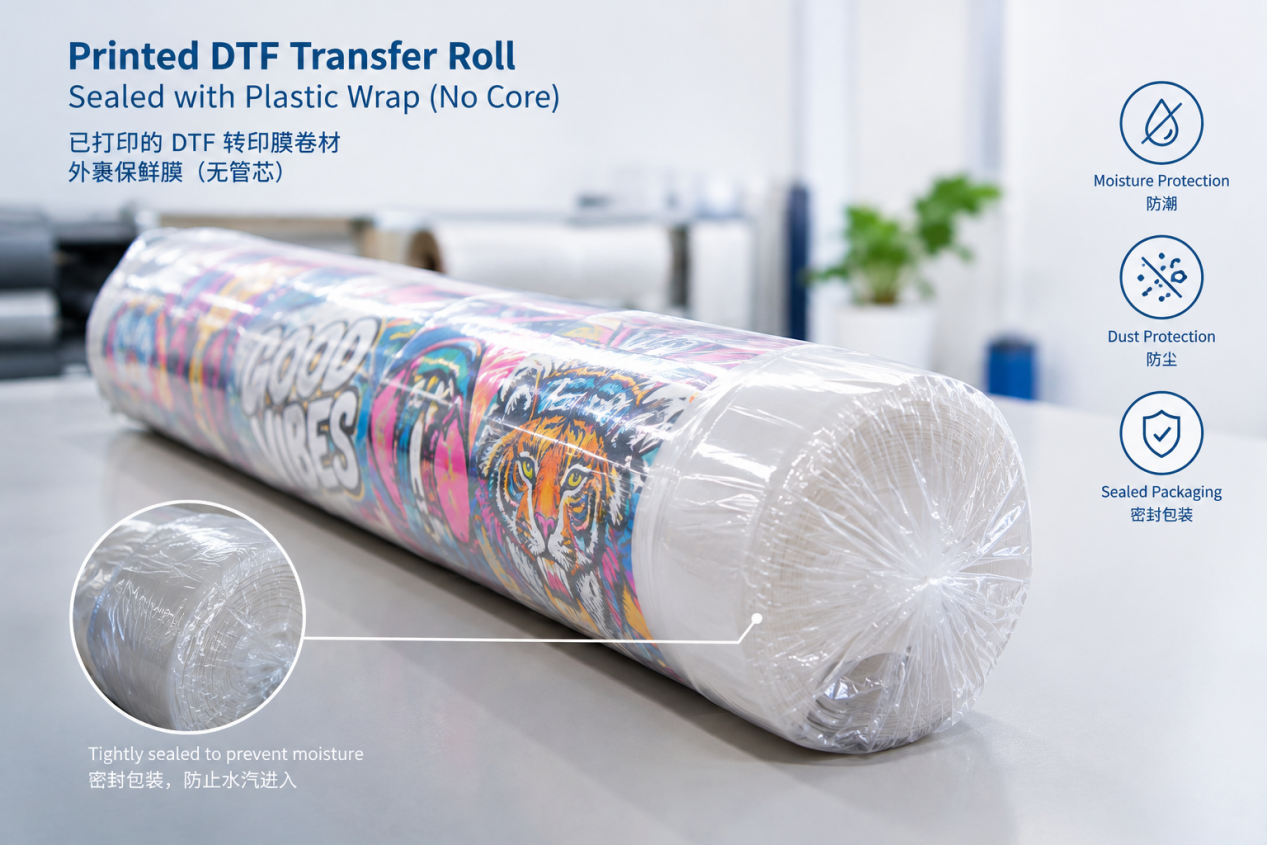
Once the rolls have cooled, wrap them with suitable clear plastic film or stretch wrap. Ensure that the packaging covers the roll securely, including the exposed ends, to reduce exposure to moisture and dust.
For additional protection, place the wrapped rolls inside a suitable packaging box. Desiccants, such as silica gel, can be added to the outer box to help control moisture inside the package.
Keep in mind that plastic wrapping and desiccants provide additional protection, but they do not guarantee complete moisture exclusion. Always start with a dry roll and use appropriate packaging materials.
2. Create a Label for Every Printed Roll
A clear label makes it easier to identify each roll without opening the package.
We recommend recording the following information:
● Printing batch number
● Printing date
● DTF film type and specifications
● Printer or ink information, where relevant
● Storage location
● Inspection status
For example, a label might read:
Batch: DTF-1023-A
Printing Date: October 23, 2026
Film Type: Double-Coated DTF Film
Status: Stored — Pending Pre-Press Inspection
This information is illustrative. Adapt the fields to your own production and traceability requirements.
A consistent naming system helps operators identify the correct roll, compare production results, and investigate issues more efficiently.
3. Separate Rolls by Batch and Printing Date
Avoid placing unidentified rolls together or mixing different batches without clear records.
Organize printed transfers by printing date, batch number, film type, or customer order. If several material types are used in the same facility, keep them clearly separated.
A simple storage location system can also help. For example, assign shelves or boxes to specific batches and record where each roll is placed.
This makes stock easier to locate and reduces the risk of using the wrong material for an order.
4. Follow a First-In, First-Out Inventory Rule
When several batches are waiting for heat pressing, a first-in, first-out (FIFO) system can help manage inventory.
Under FIFO, older stock is reviewed and used before newer stock when it remains suitable for production.
However, the oldest roll should not automatically be used without inspection. Storage conditions, packaging integrity, and actual film condition all matter.
If a roll has been stored in an uncertain environment or shows visible abnormalities, set it aside for further evaluation, regardless of its position in the inventory queue.
5. Inspect Before Releasing Rolls to Production
Before a roll is issued for heat pressing, check its packaging and the condition of the film.
Look for:
● Damaged or loose packaging
● Visible moisture or condensation
● Unusual oily-looking areas
● Dust, scratches, creases, or contamination
● Changes in the printed image or adhesive powder layer
If anything looks unusual, do not immediately release the roll for full production. Record the issue and conduct a suitable test.
A visual inspection is a useful first step, but it cannot confirm every aspect of transfer performance.
6. Keep Simple Storage Records
A storage log does not need to be complicated. A spreadsheet or paper record can include:
|
Record |
Information to Keep |
| Roll identification | Batch number and film type |
| Production details | Printing date and relevant machine or ink information |
| Storage details | Packaging date and storage location |
| Inspection | Date, visible condition, and inspector |
| Test results | Pressing results and any quality concerns |
| Final status | Approved for use, under review, or rejected |
These records help identify patterns when a particular batch repeatedly shows problems. They can also help teams compare results across different storage periods.
Conclusion: Better Organization Supports More Consistent Production
Proper storage is more than wrapping a printed DTF roll in plastic. It requires clear identification, suitable moisture protection, organized inventory, and inspection before use.
By labeling each roll with its printing batch and date, keeping packaging secure, using desiccants appropriately, and recording inspection results, printing businesses can improve traceability and reduce avoidable production risks.
Saillage recommends combining appropriate storage practices with pre-press testing to help maintain consistent DTF transfer quality.
Post time: Oct-26-2026