Brand owners, printing service providers, and DTF distributors increasingly face the same challenge: how to create premium, dimensional logos without sacrificing flexibility, print detail, production stability, or application versatility. Traditional flat heat transfers can reproduce color and graphics effectively, but they do not always provide the tactile depth required for high-value branding on caps, bags, shoes, and other customized products.
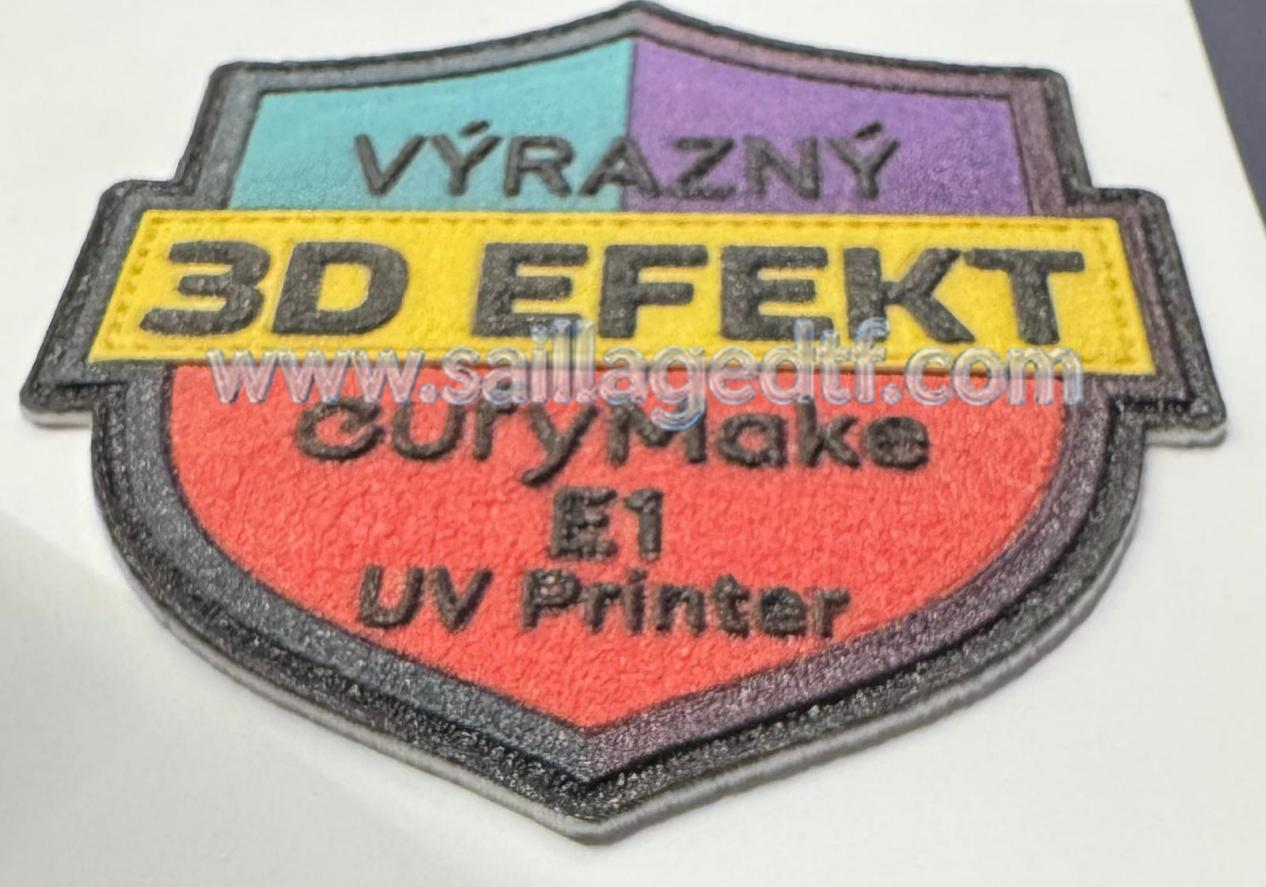
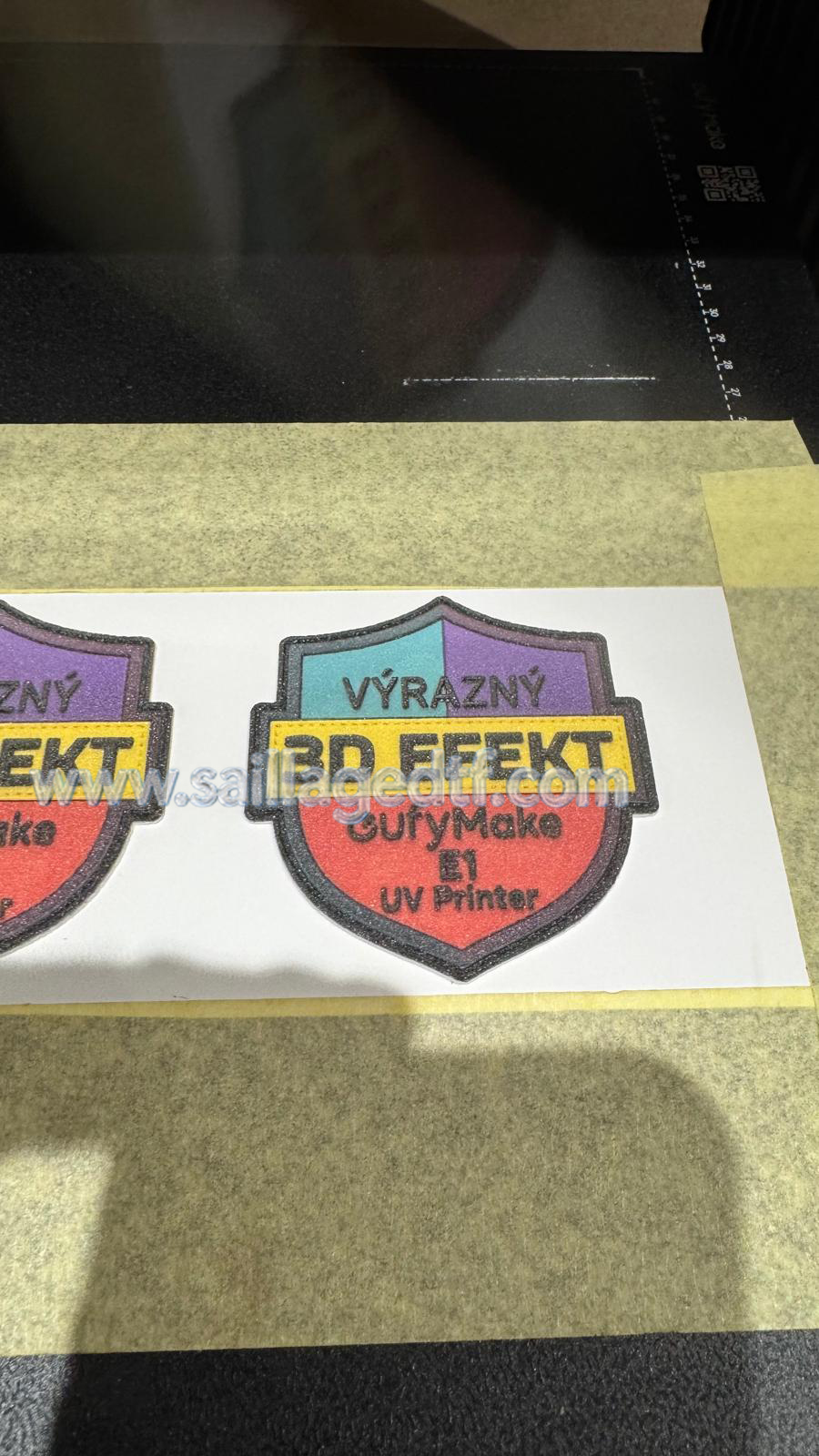
This is where 3D UV DTF TPU transfer film solutions become relevant. A properly designed UV DTF TPU film combines a flexible TPU material with high-definition graphic reproduction and a raised transfer structure, helping converters produce a visible and tactile 3D Logo effect through a controlled heat transfer process.
For B2B buyers, the decision is not simply about achieving a more attractive appearance. Material flexibility, adhesion behavior, printability, durability, and production consistency all affect yield, customer satisfaction, and the commercial value of the finished product.
Key Takeaways:
● 3D UV TPU film is designed to create a real embossed visual and tactile effect rather than a conventional flat logo.
● Flexible TPU construction makes the transfer solution suitable for applications where bending, flexing, and repeated handling are important.
● Ultra-high-definition printing supports detailed logo reproduction and premium branding requirements.
● Stable printing behavior is critical for distributors and printing businesses seeking repeatable production.
● UV TPU 3D film provides a premium logo transfer solution for caps, bags, shoes, and other customized products.
Understanding the Technical Core of 3D UV DTF TPU Film
To select the right UV DTF TPU film, it is important to understand how the material and transfer structure work together.
1. Flexible TPU Material: The Foundation of Performance
TPU, or thermoplastic polyurethane, is the functional material behind the flexibility of this type of transfer film. In practical applications, a transfer applied to a cap, bag, shoe component, or textile surface may experience bending, compression, stretching, and repeated physical contact.
A rigid decorative layer can become a performance limitation when the application surface moves or changes shape. Flexible TPU material is therefore an important design consideration for a 3D texture transfer film.
The objective is to balance two properties:
● Structural integrity for maintaining the embossed appearance
● Flexibility for adapting to the movement and shape of the finished product
For commercial printing operations, this balance directly influences the perceived quality of the transferred logo.
2. Creating the Real 3D Embossed Effect
The defining feature of 3D UV DTF printing is the dimensional appearance of the finished logo. Unlike a standard flat transfer, the design is intended to create visible height and a tactile surface.
This 3D structure can improve logo recognition by introducing three layers of visual perception:
Depth – The raised structure creates a dimensional appearance.
Light response – Surface height and contours can create changing visual effects under different viewing angles.
Tactile differentiation – The customer can physically feel the dimensional logo rather than seeing only a printed image.
For premium applications, these characteristics can help transform a standard brand mark into a more distinctive product element.
3. Ultra-High-Definition Printing and Logo Detail
A 3D effect alone is not sufficient for premium branding. Small text, thin lines, complex graphics, and fine logo details must also remain visually clear.
Ultra-high-definition printing is therefore a key part of the product value proposition. The goal is to reproduce detailed graphics while maintaining the dimensional characteristics of the transfer.
For printing service providers, this matters because commercial customers often require consistent reproduction of corporate logos across multiple products and production batches.
4. Smooth Printing and Stable Production
A transfer film must perform not only in the final application but also during production.
For a distributor, equipment wholesaler, or high-volume printing service, inconsistent material behavior can create avoidable operational problems, including:
● Print defects
● Reduced production efficiency
● Increased material waste
● More frequent process adjustments
● Batch-to-batch quality variation
A smooth printing surface and stable production performance are therefore important selection factors. In typical commercial operations, repeatability is often as valuable as the appearance of an individual sample.
Where 3D UV TPU Film Creates Commercial Value
Caps: Building a Stronger Premium Branding Effect
Caps present a specific decoration challenge because their surfaces are often curved and may contain seams, panels, or structured sections. A conventional flat logo can deliver identification, but a 3D Logo can create a more premium visual presence.
UV TPU 3D film can be considered for:
● Brand logos
● Sports team identification
● Fashion labels
● Promotional merchandise
● Limited-edition product branding
The flexible nature of the TPU transfer layer is particularly relevant when the finished cap is handled, worn, bent, and repeatedly transported.
Selection recommendation:
☑ Evaluate the curvature and surface structure of the cap before choosing logo size and placement.
☑ Test fine details and small text on the actual application material.
☑ Confirm that the selected heat transfer process provides stable bonding without damaging the cap structure.
☑ For high-volume orders, conduct production trials to verify repeatability across multiple units.
Bags: Combining Brand Visibility with Surface Adaptability
Bags can be subjected to repeated bending, compression, friction, and handling. From backpacks and promotional bags to fashion accessories, the decoration material must be selected according to the specific product structure.
A flexible UV transfer film offers particular value where a logo needs to maintain a dimensional appearance while the product is repeatedly used.
Typical applications include:
● Backpacks
● Sports bags
● Travel bags
● Fashion bags
● Promotional bags
● Customized corporate merchandise
The commercial benefit comes from the combination of branding and product differentiation. A raised logo can help a standard bag appear more customized and visually distinctive.
Selection recommendation:
• Identify the actual substrate and surface finish before production.
• Evaluate logo position based on areas subject to frequent folding or abrasion.
• Use representative samples for durability testing under the expected application conditions.
• For premium branding projects, prioritize fine-detail reproduction and a consistent embossed appearance.
Shoes: A Demanding Application for Flexible Logo Transfers
Shoes and footwear components create one of the more demanding environments for decorative transfers because the application surface may flex repeatedly during normal use.
For this reason, material flexibility becomes a central selection factor. A logo transfer used on footwear should be evaluated according to the movement of the specific application area rather than appearance alone.
Potential applications include:
● Sports shoes
● Casual footwear
● Custom sneakers
● Brand identification panels
● Decorative logo elements
A TPU transfer film can provide a practical material option when a dimensional logo effect and surface flexibility are both required.
Selection recommendation:
☑ Map the areas of repeated flexing before determining logo placement.
☑ Avoid assuming that performance on a flat test panel represents performance on a finished shoe.
☑ Test the transfer under realistic bending and handling conditions.
☑ Confirm compatibility with the actual footwear surface before mass production.
Traditional Flat Transfers vs. 3D UV TPU Film
The following comparison provides a practical selection framework. Actual performance depends on the specific substrate, transfer process, design structure, and production conditions.
|
Evaluation Factor |
Traditional Flat Transfer |
3D UV TPU Film |
| Visual structure | Primarily flat | Raised, dimensional 3D appearance |
| Tactile effect | Limited surface differentiation | Noticeable embossed texture |
| Logo presentation | Standard graphic identification | Premium 3D Logo presentation |
| Surface adaptability | Depends on transfer material | Designed around flexible TPU material |
| Detail reproduction | Suitable for standard graphics | Supports ultra-high-definition logo printing |
| Brand differentiation | Primarily color and graphic-based | Combines graphics, depth, and texture |
| Application value | General decoration | Premium logo transfer solution |
| Production requirement | Standard process control | Requires controlled printing and transfer consistency |
The key difference is not that one solution is universally better. The correct choice depends on the product objective. If the application requires a flat, conventional graphic, a standard transfer may be sufficient. If the goal is to combine 3D texture, premium branding, flexible material performance, and detailed logo reproduction, UV TPU 3D film offers a more specialized solution.
A Practical Selection Process for B2B Buyers
For DTF distributors, apparel customization companies, printing service providers, and printing equipment wholesalers, material selection should be based on the final production environment rather than sample appearance alone.
Step 1: Define the Application
Start by identifying the actual end product:
• Is the transfer being used on a cap, bag, shoe, or textile product?
• Will the application area bend or flex frequently?
• Is the surface flat, curved, textured, or structurally complex?
• Is the logo primarily decorative, functional for branding, or both?
These questions help determine whether a 3D texture transfer film is appropriate.
Step 2: Evaluate the Logo Design
Complex designs should be reviewed before production.
Key factors include:
● Fine lines
● Small lettering
● Layered graphics
● Required 3D appearance
● Brand color requirements
For premium applications, a sample should demonstrate both graphic definition and dimensional consistency.
Step 3: Verify Production Compatibility
Smooth and stable printing is essential for commercial scalability.
Before committing to a large order, evaluate:
☑ Printing consistency
☑ Film handling characteristics
☑ Graphic quality across multiple samples
☑ Stability during repeated production
☑ Compatibility with the planned transfer workflow
This approach is particularly important for wholesalers and distributors because downstream customers may use different production volumes and application scenarios.
Step 4: Conduct Application-Specific Testing
According to industry-standard quality control practices, finished-product testing should reflect actual operating conditions whenever possible.
For example:
● Caps should be evaluated on curved structures.
● Bags should be checked in areas exposed to handling and folding.
● Shoes should be tested in locations subject to repeated flexing.
A laboratory sample can provide useful information, but real application testing provides a more relevant basis for production decisions.
Why Eco-Friendly TPU Material Matters
Environmental requirements are becoming an increasingly important consideration in material selection and supply-chain management.
The use of TPU material can be relevant to buyers seeking alternatives that support more responsible material choices while maintaining application performance. However, environmental compliance requirements vary by market, product formulation, and applicable regulations.
For this reason, B2B buyers should request appropriate material and compliance documentation when environmental requirements are part of the purchasing specification.
A responsible procurement process should focus on:
• Material composition information
• Applicable market requirements
• Supplier documentation
• Product-specific compliance needs
• Verification based on the intended sales region
Rather than relying on broad environmental claims, buyers should evaluate the specific material documentation required for their own market and application.
FAQ
What is the main difference between 3D UV TPU film and a standard flat transfer?
The primary difference is the finished structure. 3D UV TPU film is designed to produce a raised and tactile logo effect, while a standard flat transfer mainly focuses on two-dimensional graphic reproduction.
Is UV DTF TPU film suitable for caps, bags, and shoes?
It can be suitable for these applications because flexible TPU material is designed to support applications requiring adaptability and a dimensional logo effect. Compatibility should still be verified with the specific substrate, product structure, and transfer process.
Can 3D UV DTF printing reproduce detailed logos?
The product is positioned for ultra-high-definition printing, making it suitable for detailed logo applications. Fine text, thin lines, and complex graphics should be tested using the actual production design before mass production.
What should distributors check before purchasing 3D TPU transfer film in volume?
Key evaluation points include print stability, material consistency, transfer performance, flexibility, logo definition, production repeatability, and compatibility with target customer applications. Sampling and application-specific testing are recommended before large-scale purchasing.
Build a More Valuable Logo Transfer Portfolio with 3D UV TPU Film
For businesses supplying the printing and customization market, product differentiation increasingly depends on more than standard graphic reproduction. UV DTF 3D TPU Film combines a real embossed effect, flexible TPU material, ultra-high-definition printing, durable logo performance, stable production characteristics, and broad application potential.
For caps, bags, shoes, and other customized products, the technology provides a practical route toward more distinctive and premium logo decoration. The most effective selection strategy is to evaluate the complete production chain—from design detail and substrate compatibility to transfer performance and real-world use conditions.
If you are a DTF distributor, printing service provider, apparel customization business, or printing equipment wholesaler, request product samples and technical information before large-scale purchasing. Application testing on your actual caps, bags, shoes, or other target products can help determine the most suitable UV TPU 3D film specification for your production requirements.
Author:Jacky
Post time: Aug-22-2026